Document analysis and individual interview.
The Master in History and Heritage of the Department of History, Arts and Humanities of the Universidade Autónoma de Lisboa presents itself as a pragmatic tool for the challenges of the 21st century, combining within each curricular unit current problems, traditional themes, conventional methods and innovative approaches. . With a structure based on the lines of work of more than a dozen research centers that host a highly qualified faculty, in a vast network of protocols with companies and entities and in the Chair of Luso-Brazilian History and Culture, the course allows the production of , with the same high degree of quality and usefulness as a master's thesis, a work project or an internship, according to the profile, objectives and career plan of each student. The Master's standards are perfectly aligned with the Lisbon Declaration on Humanities, Open Research and Innovation drafted during the European Conference of the Humanities, in 2021, by CIPSH-UNESCO (International Council for Philosophy and Humanistic Studies).
Located in the heart of Lisbon, right next to the Marquês, the Universidade Autónoma de Lisboa is the oldest private university in Portugal. Since its foundation, the Autonomous University has offered a range of advanced courses in the field of History, whose employability rate of 94%* demonstrates the quality and success of its programmes.
* Data obtained by the General Directorate of Education and Science Statistics from the IEFP and consulted in February 2021.
SYLLABUS
The interdisciplinarity of History and Archeology promotes the multiplication of resources in the practice of research, systematizing its principles and processes and organizing the logic of ideas and arguments. Knowledge of recording methods, systematization and content analysis, interpretive processing requires an understanding of the processes and strategies for developing research programs. The elaboration of research projects in History and Archeology exercises a professional practice, in the promotion of studies and in the formulation of problems with a view to valuing and safeguarding cultural heritage. The creation and dissemination of scientific knowledge is strongly suggested to students, and it is necessary to develop skills for the differentiated dissemination and sharing of the processes under study, always with a high critical spirit. Knowledge is imparted, tools and research means are used for this exercise, providing skills in information management, formulation, interpretation and publication of results. The knowledge to be acquired based on the syllabus will be of daily and practical applicability with a view to the permanent acquisition of resources for the management, analysis, interpretation and dissemination of historical and archaeological knowledge.
Archaeological Heritage I
6 ECTS
It is only possible to manage the archaeological heritage and make its correct territorial framework when, first, studies have been carried out that allow it to be understood. Therefore, the contents to be covered in this curricular unit will aim to guarantee, on the one hand, the knowledge of the multidisciplinary tools suitable for this study and, on the other hand, the practical ability to apply them. Thus, research approaches that explore the relationship between human beings and the territory, climate, environment and landscapes, both as a hunter-gatherer and later in their multiple forms of anthropization of the territory, will be focused.
This curricular unit aims, therefore, at the acquisition of theoretical-practical skills for the effective and professional exercise of interdisciplinary research activities on the archaeological heritage, regardless of their chronology, region or implementation, which may underpin project work, internship or the Master's dissertation.
Heritage Management
6 ECTS
Why do we have to manage cultural heritage?
With this question we start the Heritage Management unit, whose main objectives are to identify the different values of heritage attributed by a community, giving, equally, relevance to the practices of interpretation, cataloging and musealization, as a starting point. for their recovery, safeguard and (re)use. In addition to understanding its economic value and the means of disseminating heritage elements, it is also intended that students acquire the basic principles of management applied to this domain, within the scope of museological institutions, municipalities and associations, foundations, agencies and tour operators dedicated to cultural tourism.
In a quick answer to the question posed above, with the frequency of this curricular unit you will understand that heritage management is essential for:
- a) avoid hazards that affect physical and aesthetic integrity;
- b) obtain social (cultural and economic) profitability from the heritage without detriment to its integrity;
- c) avoid the dangers of its use as an economic resource;
- d) properly and effectively manage other off-balance sheet resources linked to their conservation and dissemination (human resources, spaces and equipment, etc.).
It promotes knowledge of the main conceptual trends concerning Portuguese Artistic Heritage, from the definition of concepts, to the evolution of cultural and scientific intervention policies. Acquisition of skills for permanent updating, namely in the areas of identification, inventory, classification, conservation, restoration and dissemination of artistic, monumental, movable and intangible heritage, in the 19th and 20th centuries.
Master's students of this curricular unit will have skills in the transversal application of theories of heritage, acquisition and permanent updating in the scientific field, applied to Culture and Artistic Heritage, fundamental for the development of research processes and rigorous interpretation of major issues in heritage matters. and the respective resolution, at a professional level, constituting a reference instrument for, among other entities, local authorities, museums and interpretive and cultural centres.
The digital humanities allow an essential interdisciplinarity for the enrichment of science production, crossing several areas of knowledge.
Digital tools influence the teaching model and the way in which research takes place, enhancing the use of new methodologies, fostering new thinking through the intersection of the humanities and technology, creating a system that corresponds to the student's interests, enriching their process. of investigation.
This UC will enable the student to acquire new skills that will make him/her able to use technologies as an indispensable tool in carrying out research, internship and projects. This new approach will culminate in innovative and creative investigations, enhanced by the use of these tools, becoming a CU whose training proposal is current and relevant. Learning will focus on new approaches, through digital methodologies, and will present innovative results (eg creation of databases, timelines, three-dimensional images, maps, videos).
With the Curricular Unit of Business and Organizational History and Culture, it is intended to highlight the role of companies and organizations in the context of Contemporary History, throughout the four Industrial Revolutions that took place in the last two centuries.
In addition to the trainees becoming familiar with research and communication methods in this scientific area, it is also intended that they will be able to distinguish Business History as a science (“Company History”) from Applied Business History (“Company History”), considering it as an instrument of strategic management.
They will be made aware of the preservation and use of company or organization archives, as essential elements for the elaboration of their respective history, not forgetting the safeguarding of the heritage – cultural, scientific, technological and industrial – inherent to their activity. The trainees will also acquire skills that will allow them to give a future to the past, within the scope of the company or organization where they exercise or will exercise their professional activity.
Economic development, within the scope of the Industrial Revolutions, since the last decades of the 18th century, has left us numerous and diversified testimonies – the Industrial Heritage – that are covered in different types of values: cultural, identity, aesthetic and economic. With deindustrialization and urbanization, this heritage is threatened and, in many cases, has been disappearing, due to economic interests, carelessness or ignorance.
With the Archeology and Industrial Heritage course unit, trainees acquire knowledge and skills that enable them to study, identify, locate, preserve and reuse. Deactivated railway stations and rolling stock, old markets or power stations can be requalified and contemplated, through museology or in situ, thus giving them a second life. The exploration of this new historiographical “territory” will prove to be very useful in the academic path, in the elaboration of the dissertation or, if that is the option taken by the master's student, in the completion of the internship and in the future professional activity.
Focusing essentially on the notions, agents and practices of safeguarding and enhancing the historical-artistic heritage between the 19th and contemporary centuries, the Curricular Unit of Portuguese Artistic Heritage II proposes a reflection informed by the most recent theoretical paradigms and by an international framework on art. Portuguese as a cultural asset or a “patrimonializable” asset. Having Portuguese art as a field of theoretical application considered in a broad sense, where tangible and intangible realities, of a historical or crypto-historical nature, of European or extra-European origin, ancient or contemporary production fit, specifically aims to promote discussion and research on artistic assets as a factor of memory and identity and to provide theoretical-practical tools for the preservation of this heritage collection in a professional context, in the context of museology, cultural mediation and the rehabilitation of buildings.
The UC aims to characterize and analyze the effects of cultural tourism on the social, economic and material reconfiguration of heritage, this notion being understood in a broad and multifaceted sense. The UC intends, above all, to learn to identify and characterize Cultural Tourism and its specificities. More comprehensively, it offers a general understanding of the history of tourism and tourism practices, critically examining the social and political conditions of the emergence of the notion of cultural or heritage tourism. With these CUs, students will finally acquire skills at an operational and practical level. They will develop management and organization skills, within the scope of the design and organization of tourist routes and itineraries and the implementation of pedagogical support materials. The UC opens to theoretical reflection and more practical knowledge, which can be mobilized both within the scope of the elaboration of the Master's dissertation, as well as in project work or internship.
Archaeological Heritage II
6 ECTS
Archeology in all its fields of intervention is associated with the management of the territory and the heritage in articulation with all the agents of transformation that safeguard and value scientific and cultural assets. The archaeological heritage is a territorial resource that is relevant for the memory of communities and for their sustainability. It also constitutes a testimony with the value of heritage, civilization and culture and represents effective contributions to the exercise of the construction of the History of Humanity, in the understanding of its relationship with the environment, landscape and resources.
This curricular unit aims to facilitate the acquisition of theoretical and practical skills for the effective and professional exercise of activities related to the archaeological heritage, in the multidisciplinary actions of management, safeguard, valorization, dissemination and dynamic integration in cultural policies in a territory, which can be translated into a project work, an internship or a Master's Dissertation.
The syllabus successively addresses «Historical and non-historical memory», «Writing Life Stories» and «From the Individual to the Family». It is a Curricular Unit located in the terminus of a 2nd cycle curriculum. Hence, the special complexity in relation to other theoretical, methodological or historiographical disciplines. The dynamism of the classes, with the wide participation of students, is affirmed as essential in a considerable discipline as essential in the almost closing of a Masters in History. So that, when closing, the schoolchildren are provided, in accessible terms, a panorama where the diegesis of the lives of individuals and family groups is affirmed.
In the construction of local and regional history, different spatial and thematic observation scales are crossed. The past of any region, city, town or village is articulated with the history of the country and the period in which it is inserted, mutually dialoguing and illuminating local identities and national histories. And in a local and regional history, the multiple thematic approaches of the territory and the natural landscape converge, of the population and settlement, of society, of the productive sectors, of the powers, of the heritage and of the mentalities, in a total exercise of making history. This local and regional history is clearly an applied history, which provides the knowledge for the execution of projects around local heritage, the organization of ecomuseums or the enhancement of local tourism. In it, theoretical competences are developed with great practical capacity to serve to carry out internships in local cultural institutions and the elaboration of the respective final report of the master's degree or the preparation of dissertations on the different aspects of the heritage and local historical valences.
Research Seminar
10 ECTS
The experience of teachers and students has revealed that, at the second semester of the Master's, there remain fundamental gaps that need to be filled. These deficiencies are of the most varied natures, and are often taken for granted by teachers, but often completely unknown to students. On a recurring basis, these gaps are practical, linked to the structuring and planning of work, the chaining of tasks, the processing of information or even the operation of basic, but almost always structural, tools. Thus, in the Research Seminar, these problems are addressed from the perspective of the specific projects to be developed, in order to stimulate a critical spirit, the ability to clarify and the ability to prioritize objectives. In this way, it is possible to provide students with the necessary tools to prepare a dissertation, a project or an internship of excellence, consolidating their skills both at the research and professional level.
There are several reasons behind the failure to complete some master's projects. Among the most common are the lack of structured planning, the anticipation of problems and their adequate mitigation. Each of these elements has the ability, by itself, to make a good idea fall apart, even when the issue to be addressed, the advisors and the student are of the best quality.
Thus, in order to guarantee the good development and success of each individual project, an entire semester is dedicated to outlining a clear and adjusted plan. The concepts and key specific knowledge acquired in other curricular units, namely the Research Seminar, are applied in practice (and therefore consolidated). The student thus gains increasing familiarity with the topic of the dissertation, project or internship to be developed, explores the state of the art and critically reflects on the topic to be addressed, and draws up a detailed plan with the respective schedule.
It will be the master who ends the course with the delivery, public presentation and approval of his work. There are three strands that can be followed. Whoever opts for a dissertation must demonstrate the state of the art, formulate the specific problem to be addressed, the methodology followed, the results obtained, good ability to discuss them and present the main conclusions. Whoever opts for an Internship Report, must identify it, characterize the organization and the person responsible for hosting it, the purpose it was intended for, the work plan defined to achieve it and the organization's expectations for it. Whoever chooses a Project, must identify the specific problem to be solved, the technical and functional architecture of the solution that they aimed to find, the work plan developed and the respective result.
The work of this UC is individual and carried out under the guidance of one or more professors to be identified.
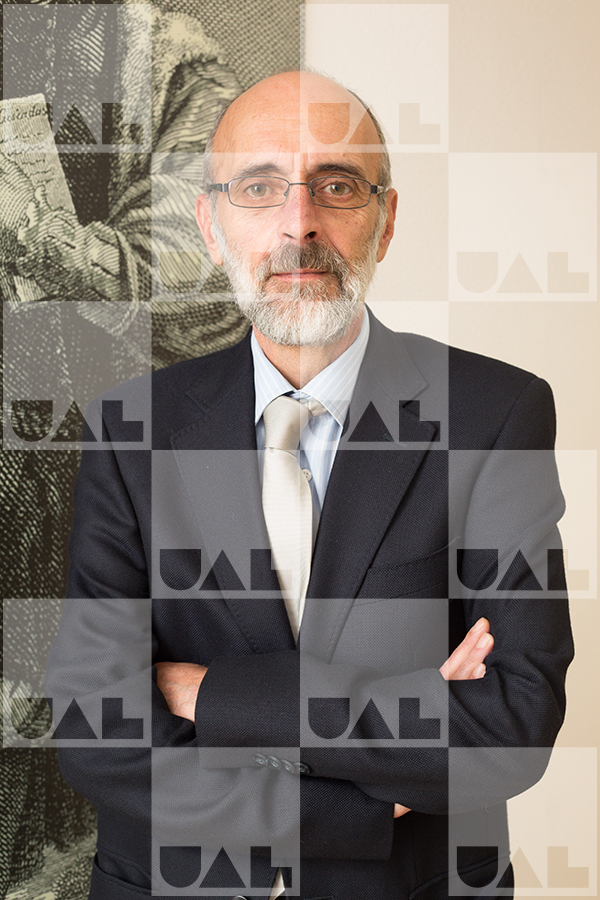
Adolfo Silveira Martins
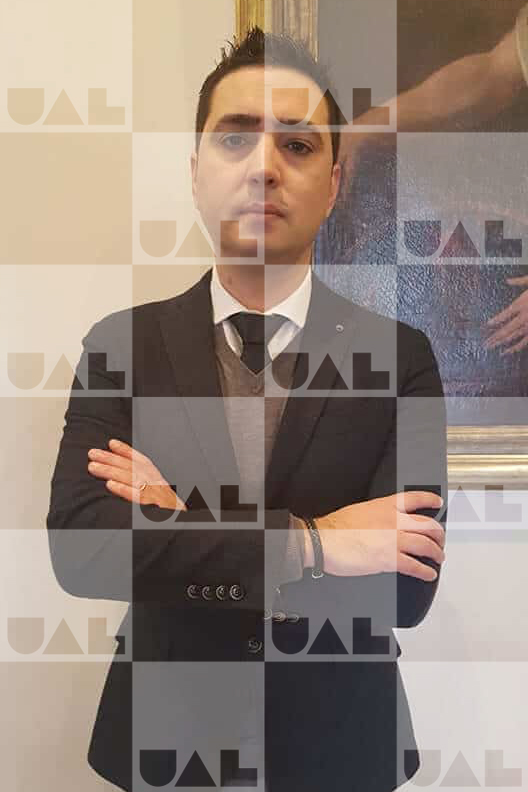
Duarte Freitas

Frédéric Vidal
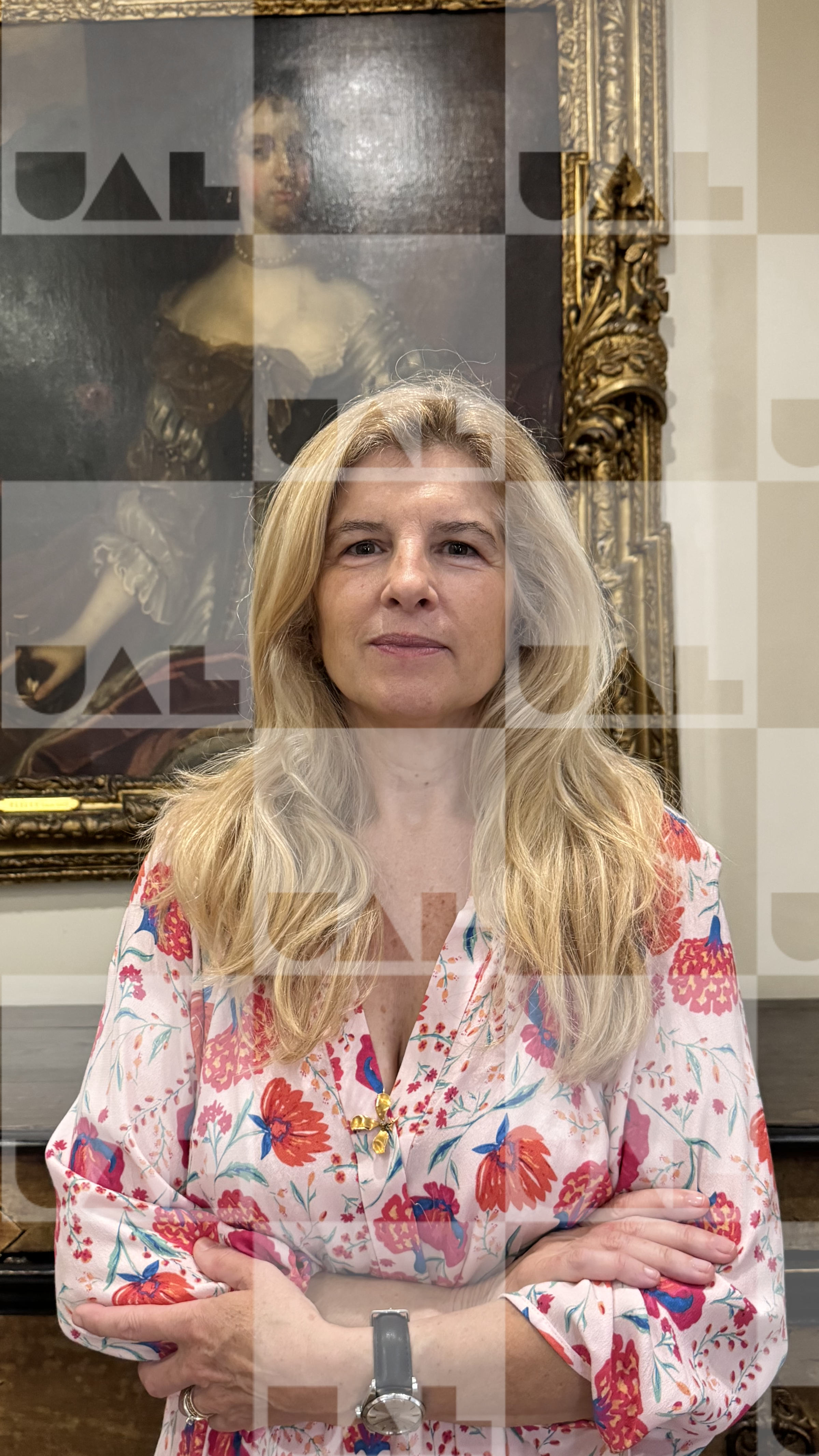
Helena Pinto
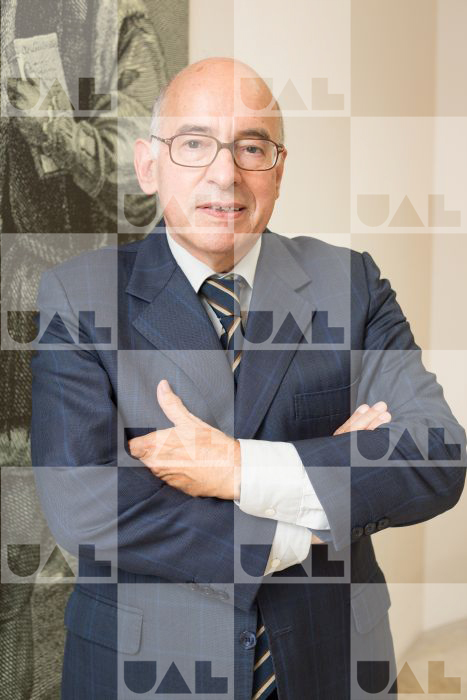
Jose Amado Mendes

Maria Luisa Jacquinet

Ricardo Seabra